PVC is inherently sensitive to heat. Excessive temperatures or direct sunlight can cause it to lose its mechanical integrity and original color.
To overcome these shortcomings, manufacturers use heat stabilizers. These are additives mixed into PVC to slow down degradation during and after production.
The benefits of heat stabilizers for PVC production are twofold:
- They strengthen the final product against heat and environmental elements
- They optimize production efficiency and consistency.
As a manufacturer, if you want to reap these benefits, you need to know exactly what’s possible. Below, we’ll explore the different ways heat stabilizer additives extend your product service life and streamline production.
How PVC Heat Stabilizers Improve Product Quality
With the right heat stabilizer, your PVC products gain a performance edge over competitor products. They’ll have better longevity, color retention, and strength. Let’s take a closer look at each advantage.
Increase Thermal Durability in the Environment
As temperatures approach 70–80°C, PVC starts to undergo a degradation process known as “loss of HCl” or “dehydrochlorination.”
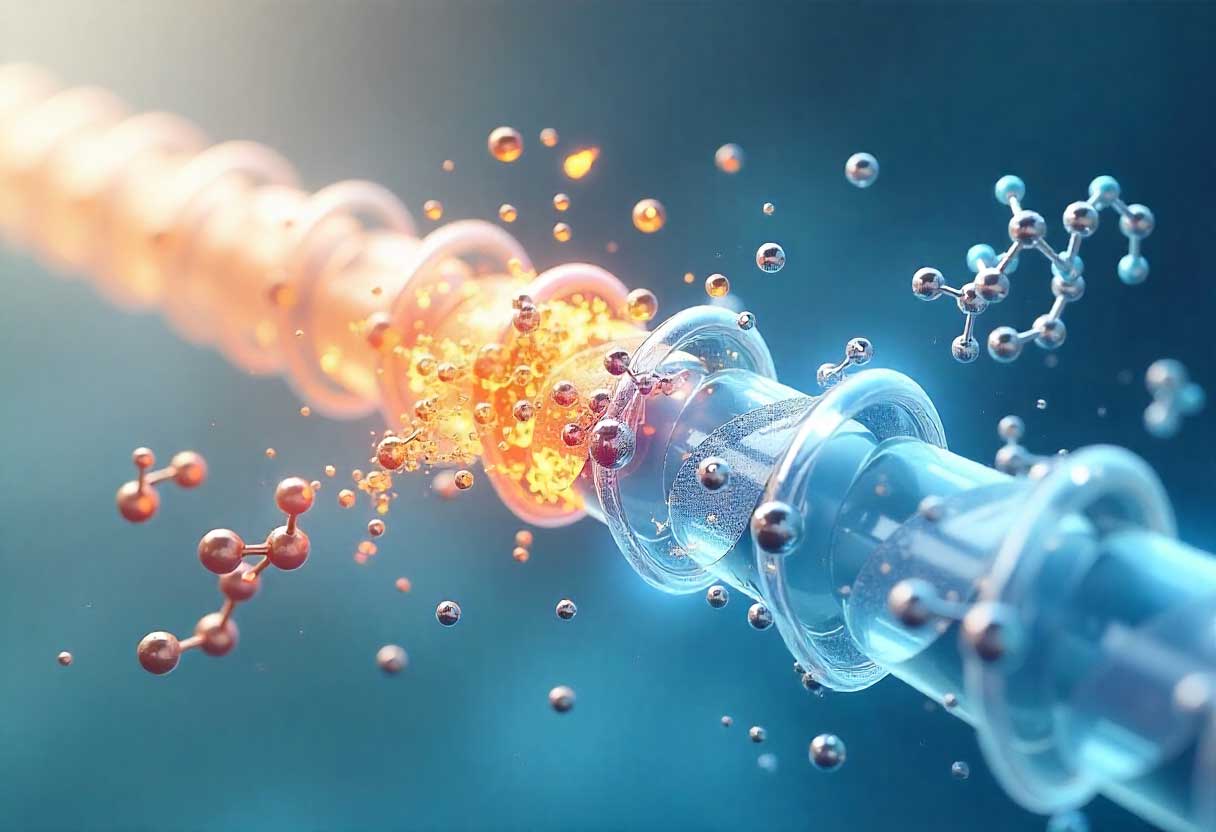
During this reaction, the hydrogen chlorine molecule detaches from the PVC backbone. This reactive compound removes more chlorine atoms from neighboring polymer chains. As a result, the PVC structure becomes increasingly weak and brittle.
Heat stabilizers raise the temperature threshold to 100-160°C, through two mechanisms:
- Neutralizing radical HCl molecules as soon as they’re released.
- Reacting with unstable chains to stop the reaction from spreading.
The table below shows the impact of heat stabilizers in multiple real-world scenarios.
| Test Scenario | Unstabilized PVC | PVC with Heat Stabilizer |
| Heat Exposure at 100 °C | Visible discoloration in 30–60 minutes; structural weakening starts shortly after | Maintains color and mechanical strength for at least 200 hours |
| Outdoor Exposure (UV + heat) | Cracking, chalking, and yellowing within weeks | Stable appearance and flexibility for 1–5 years |
| Hot water pipe (constant 70 °C) | Deformation and brittleness within 2–4 weeks | Stable for 2+ years in domestic systems |
| Electrical conduit (sun-exposed roof) | Warping and color shift during summer months | No significant deformation across multiple seasons |
Improve Resistance to Weather Conditions
If you manufacture PVC for outdoor applications, like window profiles or cables, UV and heat can quickly degrade your products.
Take PVC window profiles, for example. Without stabilization, profiles exposed to direct sunlight begin to yellow and crack after just a few months.
To protect your product against outdoor elements, you need a formulation that combines:
- Heat stabilizers: To maintain thermal stability during hot days.
- UV absorbers: To neutralize free radicals induced by sunlight exposure.
- Antioxidants: To inhibit oxidation reactions caused by heat and oxygen.
Enhance Mechanical Properties
With products such as cables, electrical housings, automobile components, maintaining structural integrity over a long time is critical.
Here’s how stabilizers and additives contribute to mechanical resilience:
- Flexibility: Stabilizers preserve polymer chain mobility so that the product can bend without cracking over time.
- Impact resistance: Degradation introduces micro-cracks and voids in the PVC matrix. Stabilizers protect the PVC’s molecular structure and retain its ability to withstand impact.
- Tensile strength: The right additive package prevents chain splitting, so the material holds its form under tension.
Prevent Discoloration
Heat and sunlight exposure trigger the formation of special patterns in the polymer chain called conjugated double bonds.
These bonds absorb violet and blue light, which causes the material to appear yellow. As the damage continues and the double-bond chain grows longer, more light gets absorbed, and the color deepens to brown or black.
Additives help prevent this situation. For example, calcium-zinc stabilizers have excellent color-holding properties. They’re often used in window profiles, clear films, medical-grade tubing, and decorative surfaces.
How PVC Heat Stabilizers Improve Processing Quality
PVC also needs protection during processing because it has to withstand high temperatures, and shear forces. Without stabilization, the material can degrade before shaping even begins.
Heat stabilizers help manufacturers deliver superior products with minimal waste and downtime. Let’s get into more detail.
Prevent Premature Degradation
PVC is processed at 160–210 °C, but its degradation temperature is around 70 °C. That’s why you always need heat stabilizers for PVC production. Otherwise, the polymer will be too brittle for processing.
Have a closer look at the table below to spot the differences PVC heat stabilizers make.
| Factor | Non-Stabilized PVC | Stabilized PVC |
| Degradation Onset | Begins at 70–90 °C | Delayed to >180 °C |
| Color Change During Processing | Yellowing and browning | Retains original compound color |
| Time to Visible Breakdown | Often within 5–10 minutes of heat exposure | Stable for 30–60+ minutes under typical processing temperatures |
| Volatile Emissions | HCl gas release with visible fume | Stabilizers trap or neutralize fumes |
Maintain Viscosity and Flow
Non-stabilized PVC is extremely prone to thermal breakdown, so it’s difficult to shape or mold reliably. Even at low-temperature processing, the molten material will have inconsistent viscosity and poor flow characteristics.
This instability leads to:
- Uneven filling of molds.
- Die lines and surface imperfections.
- Pressure fluctuations in extruders.
- Higher reject rates and downtime.
Boost Production Efficiency
Because stabilizers prevent premature degradation, manufacturers can run production lines at higher speeds. They’ll also experience fewer side effects, like burning or gelling.
This stability translates into less equipment wear and tear. Since stabilizers reduce corrosive byproducts such as HCl gas, the dies, barrels, and screws stay cleaner and last longer.
So, with the right stabilizer package:
- You can increase line speed.
- Extend maintenance intervals.
- Reduce waste from thermal damage.
- Achieve higher output per machine hour.
Improve Surface Finish
Durability isn’t the only factor that determines PVC quality. Appearance matters, too.
Stabilized PVC products come out more visually appealing. They’re smoother and glossier. They also have fewer surface defects like gel particles, black specks, and burn marks.
A superior surface finish often plays a functional role, too. Smoother surfaces are easier to clean, less prone to dirt buildup, and more resistant to micro-cracks. In medical tubing or food-grade packaging, surface integrity is also tied to hygiene and compliance.
Better PVC Starts with Better Additives
Incachem delivers proven PVC stabilizer solutions backed by expert support and fast response times. Let us help you choose the right heat stabilizer to meet your needs.